*Ai Weiwei @Large on Alcatraz Island
An Occasional Post about Art that Thrills Me
Date? Dec 10, 2014
Location? San Francisco, CA—Alcatraz Island

Synchronicity(aka Miracle) of the Day? Meeting Anna, an art-historian docent, at the beginning of the exhibit; she did an excellent job of putting Ai Weiwei’s work in an historical and political context for us after we approached her and asked questions. That’s what you’ve gotta do in a museum, I’m learning—talk to the staff. They are treasure-teachers.
Favorite Sign: “Once you’ve tasted freedom, it stays in your heart and no one can take it Then, you can be more powerful than a whole country.” —Ai Weiwei
The @Large Ai Weiwei (pronounced eye-way-way) exhibit on Alcatraz is compelling, provocative, and informative. It’s made up of a number of large pieces, a few small ones, and an audio piece—all installed in the neglected, crumbling Alcatraz prison buildings, which are in themselves of great interest.
What’s most astonishing about the exhibit is that Ai Weiwei, a Chinese dissident artist who can’t leave China because his passport has been taken away, now has his work at an American National Park Service site!
It’s incredible, really. And it’s a first for the NPS, for Alcatraz, and I think for Ai WeiWei.
Of course, as many have pointed out, it’s especially appropriate and ironic that this work, which thematically focuses on the horrors experienced by prisoners of conscience, is being shown at one of the world’s most famous prison sites.
But what I loved most is that the pieces were works of beauty, inspiration, humor, and even joy; they are evidence of the boundless creativity of this artist-activist. He’s figured out how to use internet technology to circumvent restrictions, foil his guards, educate the public, direct a staff and volunteers halfway around the globe, speak out about social and political issues, and build a career as a ground-breaking artist. Incredible, really!
Okay, here are some pictures from the day’s visit.

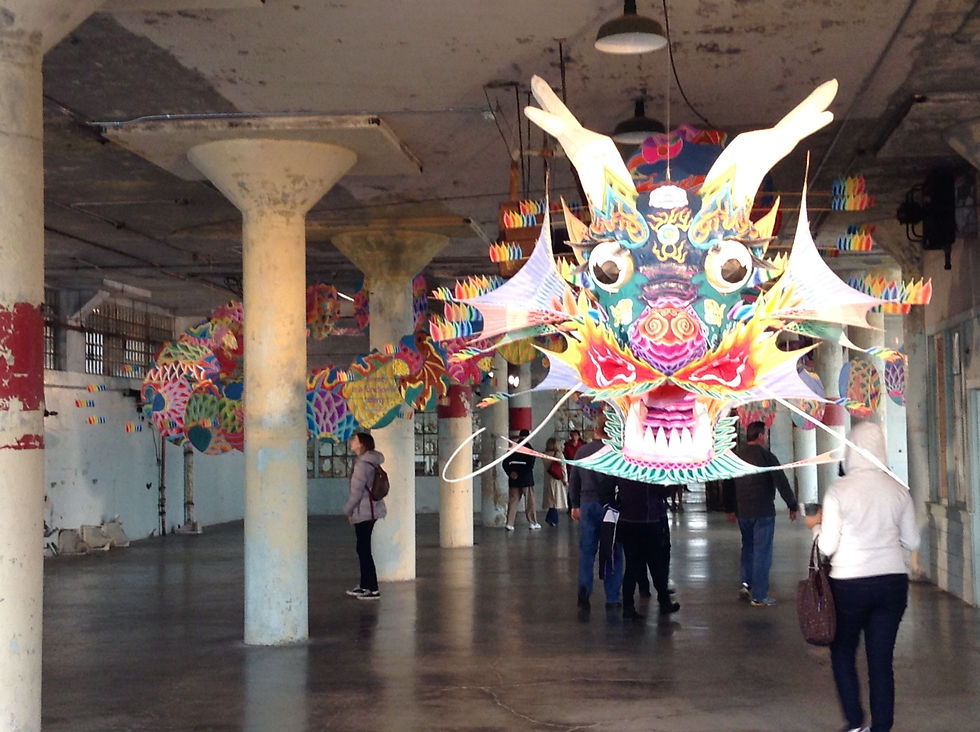
We walk up a ramp to the New Industries Building where federal prisoners used to do laundry and do factory-type labor. There are three large Ai Weiwei pieces installed there.
“With Wind” is a traditional Chinese-New-Year-type dragon kite made of hand-painted silk. It ducks its head to keep from hitting the ceiling, wraps itself around pillars, looks out broken windows—all symbolic gestures. It represents the power and freedom to sail unimpeded in the skies, in the world—a freedom that obviously is taken away in a prison.

In the next huge room is “Trace,” the piece that uses Legos to depict, on the floor, 176 faces and names of prisoners of conscience—people who’ve been jailed all over the world because of their beliefs, religious or political. Eighteen of them are women; several are American. I loved learning that pictures of the faces were digitized on a computer in China; then Legos were gathered and some of the “pictures” were assembled by volunteers from around the San Francisco Bay. Wouldn’t a whole lot of kids have loved that task?


The third big installation in the New Industries building is “Refraction,” below. It’s a metallic representation of a bird’s wing (symbol of clipped freedom), made of solar panels from Tibet—from the actual panels people use to heat water and cook food. One can only see this piece through broken glass windows from the gun gallery above it, which is where Alcatraz guards stood to watch inmates working below.

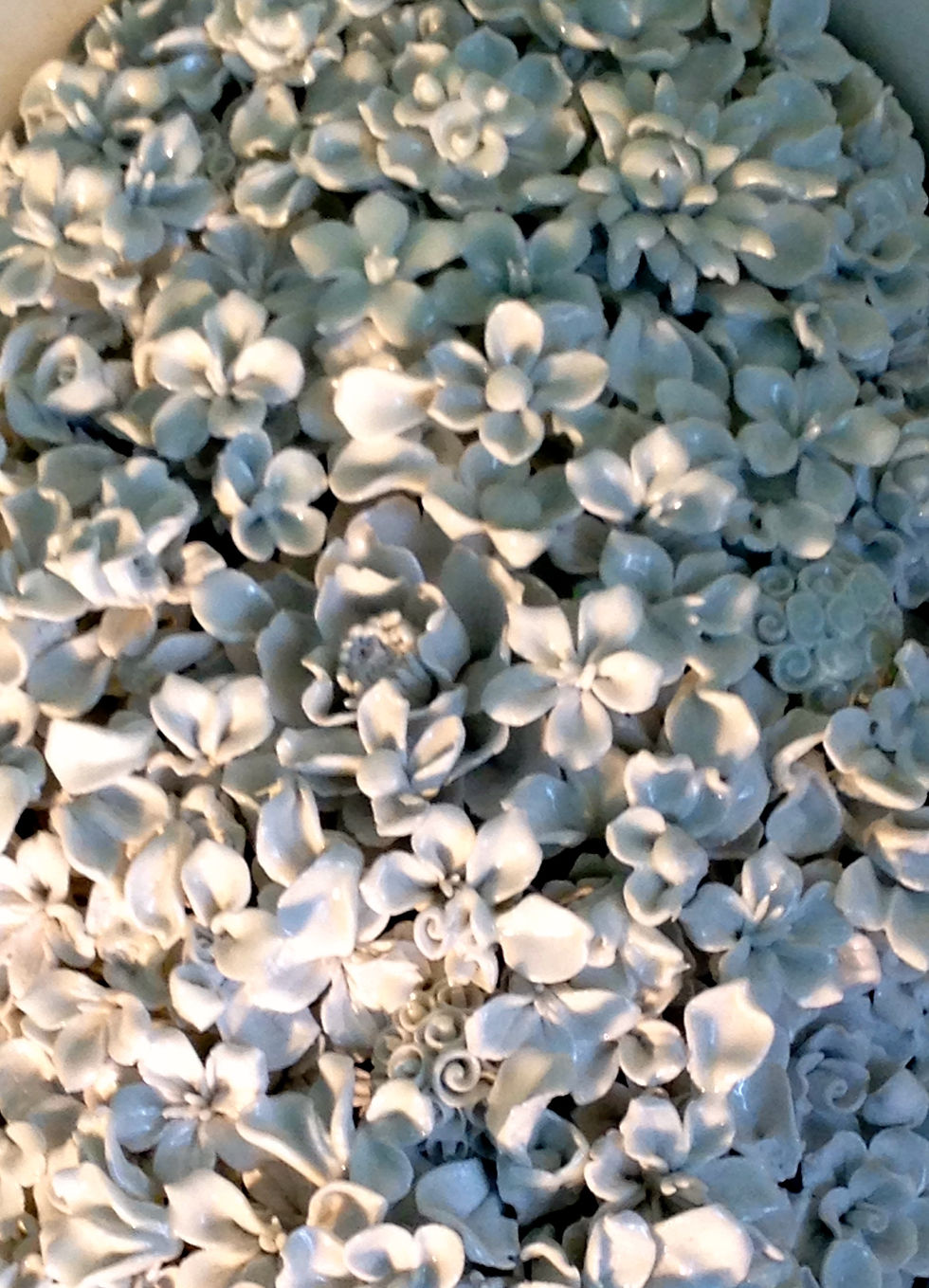
When you leave the New Industries building, you can walk up to the building with the main prison cells. There, the pieces that interested me most were the Blossom series. In them, Ai Weiwei transformed the usually disgusting bathroom porcelain fixtures, toilets and sinks, into vessels for flowers and beauty.
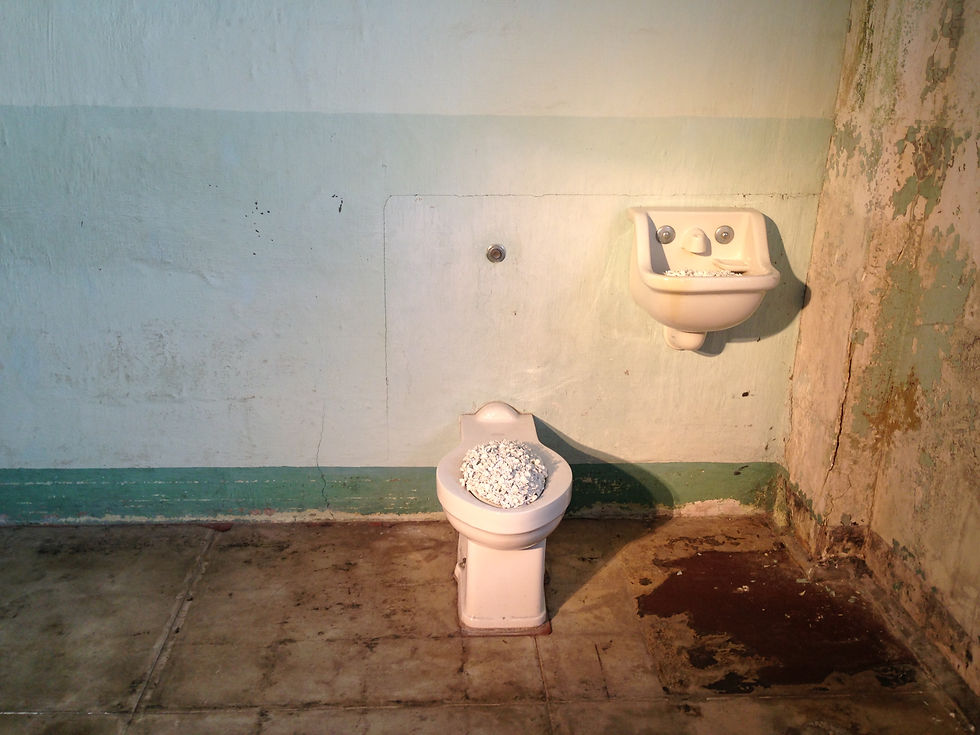
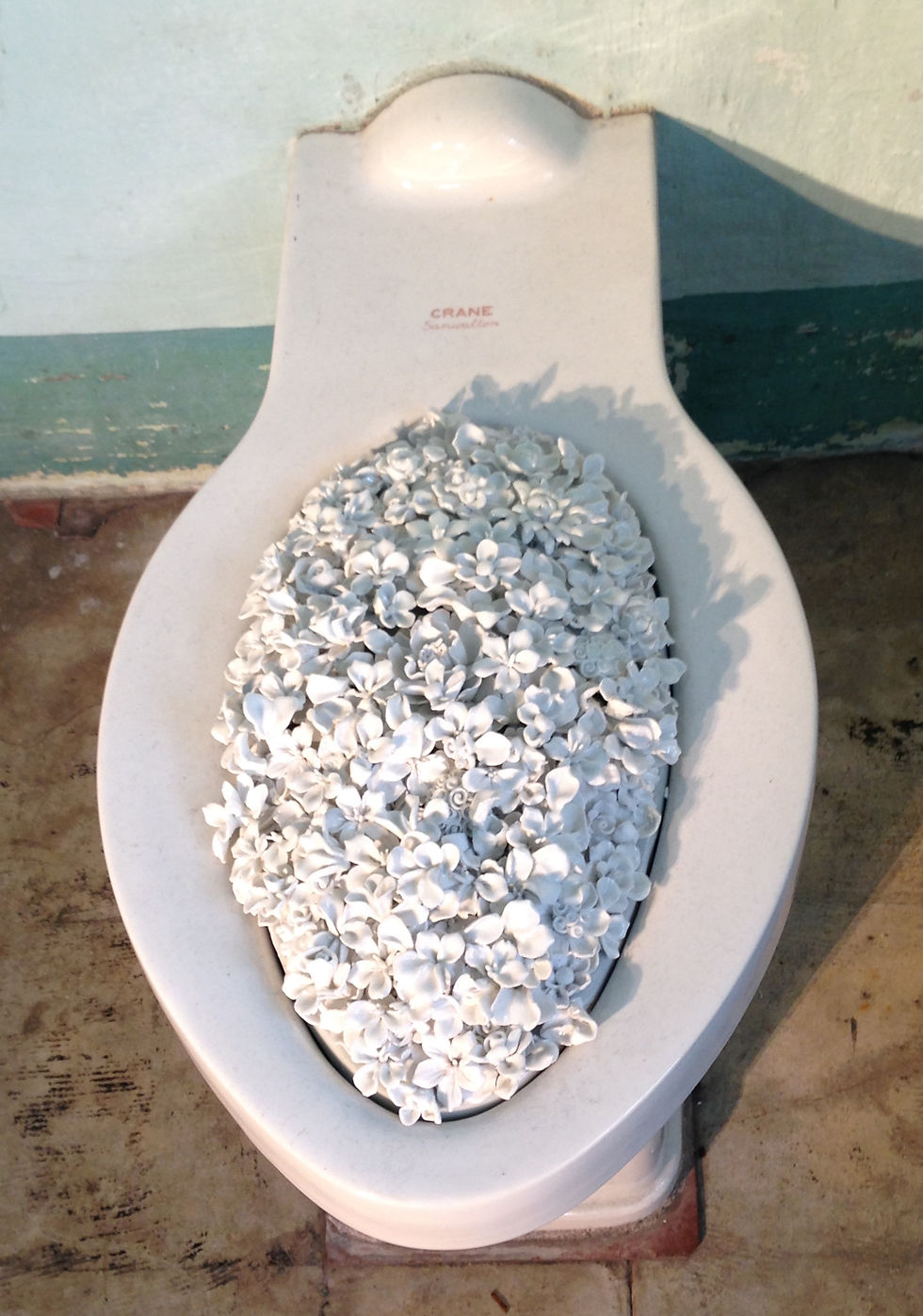
By the way, Alcatraz housed maximum-security federal prisoners—and there were not many, because the jail-able offense had to be a federal crime, not a common murder or such. In fact, sometimes there were three guards to every one prisoner. Guards’ families lived in Victorian houses built for them on the rock; their kids took a boat to San Francisco to go to school.
There’s a good children’s book that garnered a Newbery Honor in 2007 about Alcatraz: Al Capone Does My Shirts by Gennifer Choldenko. It’s about a boy who lives with his family (including his autistic sister) on Alcatraz, and gets involved in a variety of dicey kid situations.
Finally, when you leave the island, you once again read statements of liberation:


Comments